
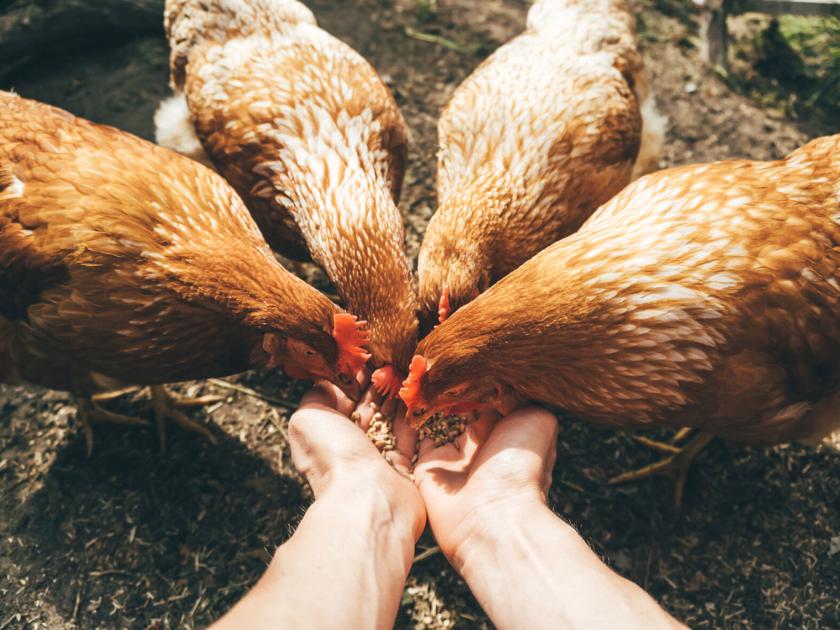
Career opportunities are greater than ever in agriculture and the poultry industry, yet few youths have been exposed to the diversity of poultry industry jobs available.
To get a clear understanding of future careers, youths need first-hand exposure to the opportunities. Youth organizations, schools and the poultry industry itself can help.
Since 2001, the Penn State poultry science program has been making a concerted effort to increase the number of students exposed to opportunities in the poultry industry.
The number of students studying poultry science at Penn State increased threefold by 2004. In 2005, Penn State initiated the Penn State poultry and avian science minor. Since then, the minor has graduated 115 undergraduates.
During that same time, the poultry program has placed 98 graduates in the poultry industry, and 15 have gone on to advanced degree programs (vet school or grad school). Of those, five are working in the industry or in the poultry curriculum at a university.
Just under 60% of these students were first exposed to poultry through youth programs developed by Penn State Extension.
The 4-H program has poultry projects that teach youths how to successfully raise poultry for meat and eggs as well as exhibition flocks. Enrollment in poultry projects has grown from 500 to over 3,100 youths annually.
In addition, 4-H and FFA offer multiple career development events, workshops and competitions. Penn State Youth Poultry 101 offers an opportunity for youths age 12 to 18 to learn about poultry and careers in a hands-on format.
Avian Bowl, poultry judging and barbecue presentations allow youths to demonstrate their knowledge. If you are interested in learning more about this program, contact your county Extension office or high school FFA chapter.
Plenty of Career Options
The poultry industry can help support these youth programs. Being open to these programs locally is extremely important. These youths develop a genuine knowledge of poultry production and the importance of biosecurity, and are much more likely to look at careers working with poultry and in agriculture than they otherwise would be.
The industry can support meat bird or “egg to egg” projects, or judging contests, by donating eggs, products or chicks. Industry members can offer tours of their farms, companies or operations with a slant toward the various employment opportunities for post-high school, technical school or college graduates. Also, developing their understanding of industry practices can improve how our communities view agriculture.
Finally, it is important that youths understand there is a wide array of employment opportunities for all levels of educational and background.
The poultry industry has sustained needs for laborers, truck drivers, mechanical and technical operators, computer and other systems managers, as well as people to manage other employees and the production of birds, product development, food safety, quality assurance, and feed milling, to name a few.
Poultry at Penn State
Students studying poultry science at Penn State are part of the animal science major. Animal science majors can individualize their program of study to fit their personal interests and professional goals. There are two options: business/management or science.
Business/management combines business and the production and management of poultry, and prepares students for careers in business management, advertising, public relations, grow out, breeding, live production, hatchery, feed mill management, computer science or IT support, personnel, and sales and marketing.
The science option features in-depth study of the basic science relevant to animal biology. Career opportunities include veterinary medicine, graduate study, research and development, nutrition, food processing, safety and quality control, and pharmaceuticals and biotechnology.
The poultry science students also have opportunities to gain valuable work experience through student work in labs, and with research projects, externships, and internships.
A typical graduate has an average of three job offers prior to graduating, and most have accepted an offer prior to starting their last semester. This trend has repeated itself for the last 10 years, showing continued demand for students.
Penn State poultry science, however, offers so much more. This year the 34 students in the program received over $54,000 in scholarships.
The Poultry Science Club is one of the fun ways for students to learn more about poultry while building relationships, contacts and experience. The club is extremely active in community service projects, annual fundraisers, the sponsoring of invited speakers, and educational tours.
The highlight of the year is attending the U.S. Poultry and Egg Association Convention and Trade Show in Atlanta each January. At this convention the students interview, compete for various awards, and have a great time while seeing the vast career opportunities in the poultry industry firsthand.
Our Penn State collegiate poultry judging team is extremely competitive and will travel to the Southern national contest held at Louisiana State University this spring and the fall national contest in Fayetteville, Arkansas.
If you are interested or know of someone that would like to learn more about these opportunities, contact Phillip J. Clauer at 814-863-8960 or pclauer@psu.edu.
A personal visit can be arranged for interested students and their families to see the facilities and meet the people in the Penn State Department of Animal Science and College of Agricultural Sciences.
Phillip Clauer is an associate teaching professor in the Animal Science Department at Penn State’s University Park campus. He teaches, advises students and serves as the Poultry Science Club adviser and coaches the collegiate poultry judging team. His Extension focus is on providing leadership and support for 4-H youth poultry programs, projects, contests and events.