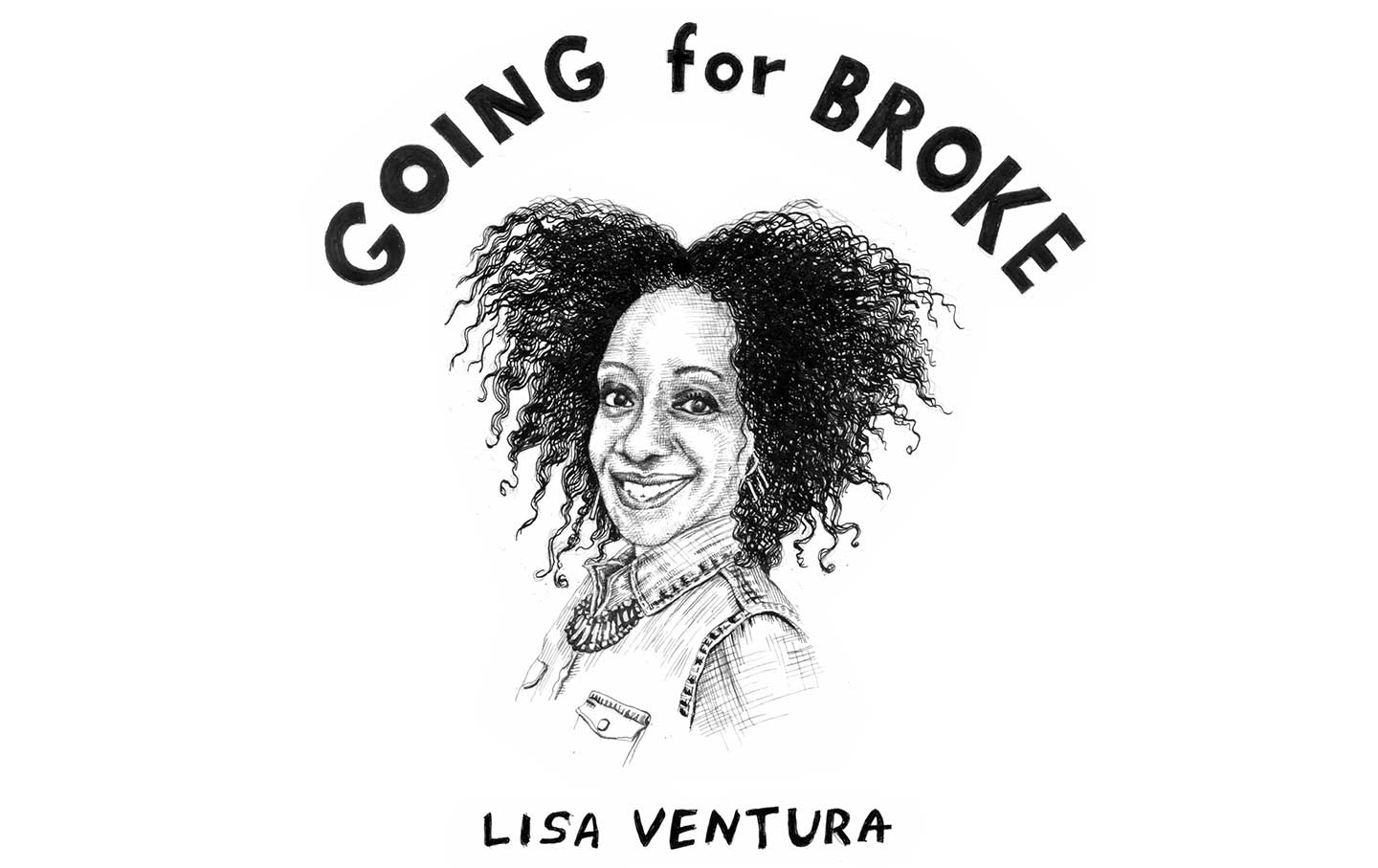
Lisa Ventura is a housing case manager by day, but for years she’s also been her family’s unofficial social worker by night. Lisa was just a kid when she learned to help her Spanish-speaking mother navigate the welfare system. It was a struggle, but she could handle it. But she wasn’t prepared for what it would feel like when her isolated father lost his job during the pandemic and needed her help filing for unemployment. Battling the bureaucracy during Covid on top of a troubled family history takes its toll.
What Lisa experienced first-hand is what experts call “administrative burden,” the mountain of paperwork and forms we all have to fill out—but like many burdens, this one falls disproportionately on those already experiencing financial hardship. On this week’s episode of the Going for Broke podcast, Ray Suarez also talks to Pamela Herd, professor at the McCourt School of Public Policy at Georgetown University, and coauthor of the book, Administrative Burden: Policy-Making by Other Means.
Powered by RedCircle
Listen to this full episode of Going for Broke With Ray Suarez.
To be the first to hear all the episodes in this season, subscribe to Going for Broke with Ray Suarez on Apple Podcasts, Spotify, Google Podcasts, or wherever you get your podcasts. New episodes premiere each Monday.
Going for Broke With Ray Suarez is a podcast by the Economic Hardship Reporting Project and The Nation. To learn more about the Economic Hardship Reporting Project, sign up for our newsletter. To support all of The Nation’s journalism, including our podcasts, subscribe today.
FULL TRANSCRIPT
Ray Suarez: From the Economic Hardship Reporting Project and The Nation, this is Going for Broke: Stories of people living through tough times and conversations about solutions that give us hope. I’m Ray Suarez.
Today, we’re going to talk about the exhausting red tape we go through to extract what we need from the government. Experts call it, administrative burden. Lisa Ventura knows all about it. She’s a case manager for clients in supportive housing in New York City but her skills at battling bureaucracy go way back.
Lisa Ventura: My mother’s been my client since I was like 8 years old. If I could be completely honest. I’ve been filling out paperwork since I learned how to write.
Ray Suarez: Lisa’s family is from the Dominican Republic. Helping her Spanish-speaking mom navigate the welfare system came naturally to her. But over time, this kind of unofficial social work can take its toll. Lisa felt that acutely during the pandemic when she got a call from her estranged father. He’d lost his job and needed help filing for unemployment.
Lisa Ventura: So already, this was another client that I was adding to my caseload, pretty much. I didn’t want to do it. It was another thing that I had to worry about. But I know that my dad has this temper which if things don’t get done right away, he’ll get angry. So I figured, eventually I was going to have to do it because he was going to get angry and then we were going to argue and we were just not going to be in a good place.
Ray Suarez: Many of us are doing this invisible work, filling out all these forms to get money for our kids and our parents just to survive. The applications are crazy. In a few minutes, we’ll speak to an expert about promising steps to cut through this kind of bureaucracy. But first, let’s hear Lisa Ventura’s story about her father. It was early in the pandemic and he had been furloughed from his job as a mechanic at a Chevrolet dealership.
Lisa Ventura: Yeah, he just called and said, “Hey, they sent me home from work. They said I need to file for unemployment. Can you go in and check that? Also, here, I’m going to send you all the paperwork. I’m going to send you pictures of all the paperwork they gave me at work. Take a look at it.” And so I just took a deep breath. I took a deep breath. I was like, ugh, here we go.
Ray Suarez: The call could not have come at a worse time. Lockdown had just started. Lisa’s work had gone remote. Her kids were home from school, her husband was working 13-hour shifts. The pressure felt intense.
Lisa Ventura: I was in the middle of warming up food, typing up progress notes, trying to catch up and I just couldn’t. I couldn’t look at it right away.
Ray Suarez: But it wasn’t just pandemic stress that made Lisa balk. There was a history to contend with. Her father walked out when she was 5 years old. He had let her down over and over.
Lisa Ventura: Sometimes he’s been really generous. But as a kid, all I ever wanted was the time, his presence. I wanted him to be there. At graduation, I wanted to see him there. At any of my birthday parties, I wanted to see him there. And he was saying he would be there, he would just flake or there was always something that kept him from showing up.
Ray Suarez: That was the backdrop. When her dad called, she had no desire to help him.
Lisa Ventura: Because when I was younger, he wasn’t there. Anytime that I wanted him there, he wasn’t there. He just wasn’t present for me and I didn’t feel like I had to do anything for him.
Ray Suarez: But Lisa knew her Dominican father couldn’t fill the forms out by himself. His English wasn’t fluent.
Lisa Ventura: Even if you sent the documents in Spanish, everything needed to be done online so you need to have a computer. And you need to know how to navigate a computer. You need to have an e-mail address.
Ray Suarez: It made sense that the job would fall to Lisa. She had the skills. She’d been independent and focused ever since she was little.
Lisa Ventura: I’ve just been working hard since I was a kid. I got my first job when I was 13. My mom was on public assistance so there wasn’t much to go around for all of us. Going away to college was always a dream, so I made sure to work really hard to do that. Buying a home was always a dream, so I worked hard to do that. My mom didn’t get to do any of the things that I’ve done or that I’m doing and she had me at a really young age. She had me at 19 too. So she kind of gave up her youth to be a mom. So I’m very grateful for all the sacrifices that she made, the sacrificed that my grandmother made to bring my mom here and my great-grandmother who was the first one to migrate from the Dominican Republic. I got to enjoy what I have now because of the sacrifices that they made.
Ray Suarez: Lisa’s 36 now. She lives in New Jersey with her husband and two young sons. But she still visits her old neighborhood in Manhattan.
Lisa Ventura: This is the Heights, as we call it. This is where I grew up and this is, currently we’re on 189th Street and St. Nicholas, but we’re going to turn left so that we could walk towards my elementary school. This is where we used to come lunch, just run around and play around.
Ray Suarez: Further down the street, Lisa sits on a park bench and reflects on what happened during the pandemic. It took her a few days to come around, but she eventually did file her father’s unemployment form.
Lisa Ventura: The process of filling out all that paperwork was just so annoying. And then I did it and it became a weekly thing, every Sunday. I knew I had to file so that he wouldn’t lose his benefits. Then it was also like, Lisa, if you don’t do this for him, who else is going to do this for him? You’re his daughter. Regardless of what happened in the past, he’s your dad. And then this is also just me learning how to forgive. My dad’s been a hard-working man all his life so he never needed my help in that way. But this is a reality for a lot of immigrant families. They come from a different country, and in order to survive, they have to go into the welfare system. And they need people like us to be able to help them navigate because they don’t have the skills for it.
Ray Suarez: Lisa has always kept a journal but she began to write more seriously during the pandemic. She published an essay in Slate about her father. It was an exciting time. But then she felt guilty because knew she’d left out part of the story.
Lisa Ventura: I felt really bad after the piece came out because it kind of put my dad in a negative light. But, ironically enough, I feel that I think I needed to get that out because it’s just a narrative that I kept playing in my head like, oh he was never there, he was never there, he was never there, he was never there. But he’s been around. He didn’t completely disappear. Especially after my brother passed, I guess that changed something for him and he became a lot more present in my life. He would call more often, he would come around more often. So I think I needed to write it to realize that hey, that’s not the story anymore. He’s around. He calls you. He comes. He visits. He stays at your house.
Ray Suarez: Lisa’s brother died by suicide when he was 16. She was in her first semester of college.
Lisa Ventura: The most traumatic thing that’s ever happened to me was losing my brother. Deep down, my biggest fear is something like that happening to my sons. Or me not being able to see a sign and not be able to give them the tools or the help or whatever it is that they may need. Because, you know, when suicide happens, you’re like, but what happened?
This is my building. Oh, it’s open.
Ray Suarez: Lisa’s mother still lives in the apartment on Fort George Avenue where Lisa grew up.
Lisa Ventura: Oh, you need to be careful with this step right here because it’s different and it’s higher than all the others and everyone always trips. Oh, we have a puppy, too. [Doorbell rings.] Hello.
Ray Suarez: Hello.
Ray Suarez: Just inside the apartment, photos of Lisa’s late brother, Arturo, hang in the entryway.
Lisa Ventura: So this is my brother’s altar that my mom has set up and she always keeps fresh flowers and a candle and these are trophies that he won either for basketball…
[Lisa’s mother speaks to us in Spanish.]
Lisa Ventura: She says that she’s in the process of just letting him rest. We always talk about him, we always keep his memory alive. We always remember him and that’s how she chooses to honor him. And I guess she wanted him to be at peace. Yeah.
Ray Suarez: Lisa’s mother has sought peace with Lisa’s father, as well. They’re friends now. And Lisa’s resentment towards her dad continues to soften as she learns more about him and his early days back in the Dominican Republic.
Lisa Ventura: He’s been working since he was like, 12 years old. He’s the second-youngest of like 12 siblings. It seems like they had a rough upbringing. He hasn’t really had much of a childhood. So he doesn’t know how to show up that way for me or for any of his grandchildren.
I have this desire to break some sort of cycle for my children. Both my husband and I grew up with non-present fathers. So we try our very best to be as present and loving and nurturing and available for our children. Because we know what it feels like to not have that.
So we have my husband, Emmanuel, who was the gracious chef for us. [Emmanuel laughs.] We have my mom. We have the boys, Devan and Darius and Hershey. [Voices of the boys.]
Ray Suarez: Thanks to Lisa Ventura for sharing her story. You can read her essay, “When My Father Called Me About His Unemployment” at Economichardship.org. Thanks also to the Bold Voices Collaborative and an important message before we go on. The National Suicide Prevention Lifeline is a hotline for individuals in crisis or for those looking to help someone else. To speak with a certified listener, call 1-800-273-8255.
Ray Suarez: Joining me now is Pamela Herd, professor at the McCourt School of Public Policy at Georgetown University, and coauthor of the book, Administrative Burden: Policy-Making by Other Means.
Well, professor, you heard Lisa Ventura’s story. Like a lot of us,…